Exporting school buses, often based on van chassis, requires careful attention to the specific needs of different age groups. Key considerations include safety features, seating configuration, accessibility, and durability. This overview outlines three primary categories—Kindergarten, Primary School, and Secondary School—and provides typical model examples and configurations that meet these distinct requirements for the international market.
Yuxuan
2026-01-20 17:07:53
Introduction to School Bus Exports
Exporting school buses, often based on van chassis, requires careful attention to the specific needs of different age groups. Key considerations include safety features, seating configuration, accessibility, and durability. This overview outlines three primary categories—Kindergarten, Primary School, and Secondary School—and provides typical model examples and configurations that meet these distinct requirements for the international market.
1. Kindergarten / Preschool Mini-Bus
Designed for young children (typically ages 3-6), these are small, maneuverable buses based on light van platforms. The focus is on maximum safety, supervision, and convenience for small children.
Typical Base Model: Ford Transit Custom Minibus, Mercedes-Benz Sprinter City 45, or similar light-duty van conversions.
Key Safety Configurations:
Low Entry Step & Handrails: For easy boarding and disembarking.
Integrated Child Safety Seats: Small, forward-facing seats with built-in, age-appropriate 3 or 5-point harness systems (not just seat belts).
Adult Supervisor Seat: A rear-facing or swiveling seat for a teacher/nurse to monitor children.
Safety Windows: Fixed windows on the lower half to prevent children from opening them.
Flashing LED Stop Signs & Crossing Arm: Mandatory in many regions to alert traffic when children are entering/exiting.
Capacity: Usually between 12 to 20 child seats.
2. Primary School Small/Medium Bus
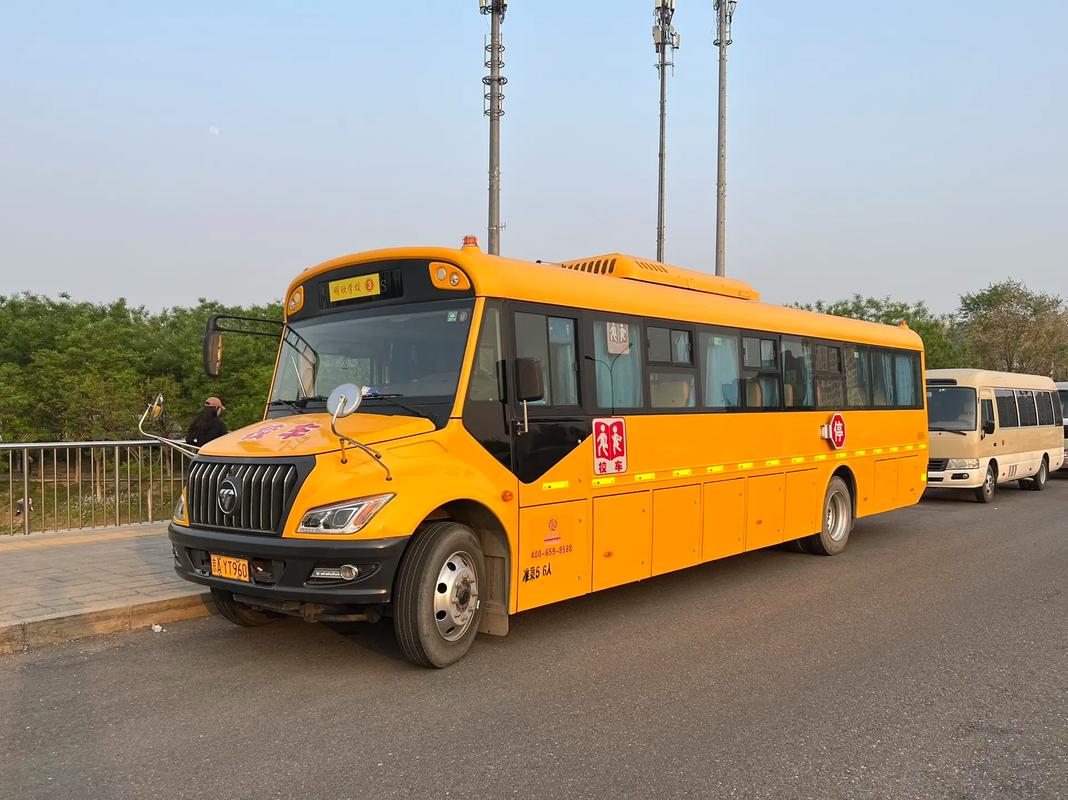
For children aged approximately 6-12, these buses are slightly larger, emphasizing robust safety and increased capacity. They often use medium-duty truck or van chassis.
Typical Base Model: IC Bus CE Series (Type C), Blue Bird Micro Bird, or a Higer midsize bus chassis.
Key Safety Configurations:
Compartmentalized High-Back Seating: Closely spaced, energy-absorbing high seat backs padded with fire-retardant foam ("the compartment") to protect children in a collision.
Standard Lap/Shoulder Seat Belts: For each passenger.
Enhanced Exterior Mirrors & Crossing Control: Large cross-view mirrors and an extended stop sign arm.
Durable Interior: Easy-to-clean, vinyl or reinforced fabric seats and flooring.
External Storage: For school bags and sports equipment.
Capacity: Typically ranges from 30 to 50 passengers.
3. Secondary School / High School Large Bus
For teenagers and longer routes, these are full-size buses focused on high capacity, efficiency, and compliance with standard passenger vehicle safety for adults/older children.
Typical Base Model: Yutong ZK6119, King Long XMQ6127, or a conventional Type D rear-engine school bus chassis.
Key Configurations:
Standard Passenger Bus Seating: Padded seats with lap/shoulder belts, arranged 2+2 or 3+2.
Ample Luggage Space: Large overhead racks and under-seat storage for books and backpacks.
Climate Control: Powerful air conditioning and heating systems for comfort on longer journeys.
Advanced Driver Assistance: May include backup cameras, blind-spot monitoring, and electronic stability control.
High Fuel Capacity & Durability: Designed for daily, high-mileage use.
Capacity: Can carry 50 to 70+ students.
Comparison of School Bus Types
The table below summarizes the key differences between the three categories for easy reference.
School Type
Typical Chassis/Model
Seating Type
Key Safety Features
Capacity Range
Kindergarten
Light Van (e.g., Sprinter)
Integrated Child Seats with Harness
Supervisor Seat, Flashing Lights, Fixed Windows
12-20
Primary School
Medium Bus (Type C)
Compartmentalized High-Back Seats
Crossing Arm, Stop Signs, Lap/Shoulder Belts
30-50
Secondary School
Full-Size Bus (Type D)
Standard Passenger Seats
Advanced Driver Aids, Standard Seat Belts
50-70+
Conclusion
Exporting school buses is not a one-size-fits-all endeavor. Success depends on offering appropriately configured vehicles for each educational level. Kindergarten buses prioritize child-specific restraint and supervision, primary school buses focus on proven passive safety compartments, and secondary school buses require adult-scale capacity and comfort. Understanding these distinct configurations—from the base chassis to the specific safety and seating features—is essential for suppliers like Yuxuan to meet the stringent demands of the global school transportation market and ensure the safe passage of students.